The best digital microscopes for kids range from simple viewers for early learners to screen-equipped models that capture close-up images. Choose by age, how much specimen preparation you want to do, and whether a live screen or traditional eyepiece best suits the child.
Quick Top Products
TOMLOV P10 Digital Microscope
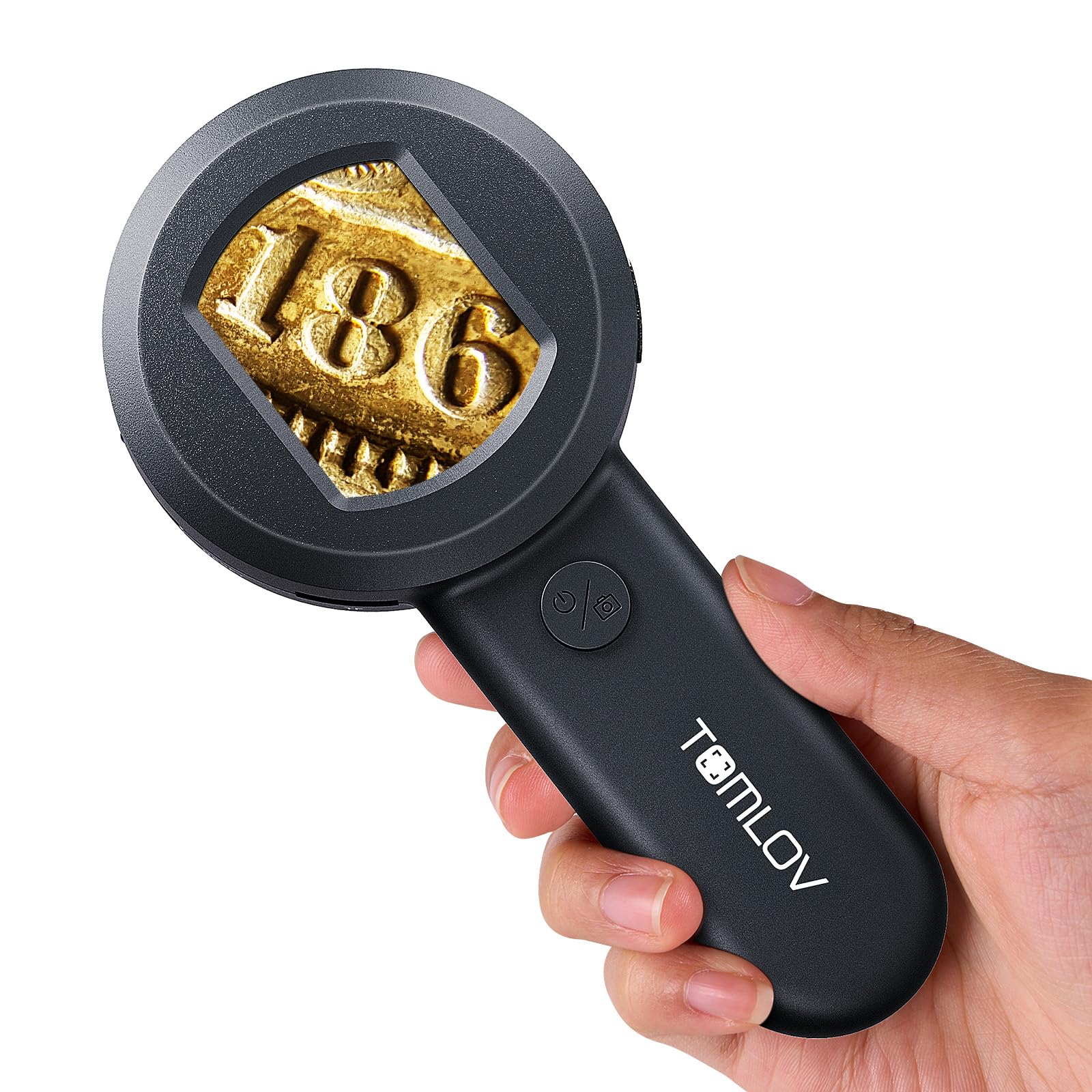
- A 2-inch LCD displays live close-ups for shared viewing.
- Fixed 100x magnification pairs with 4x zoom.
- The camera captures 16MP images and stores up to 300 photos.
Best For: Older kids and families who want a handheld viewer with a built-in screen and image capture.

Educational Insights GeoSafari MicroPro 95-Piece LED Microscope Set
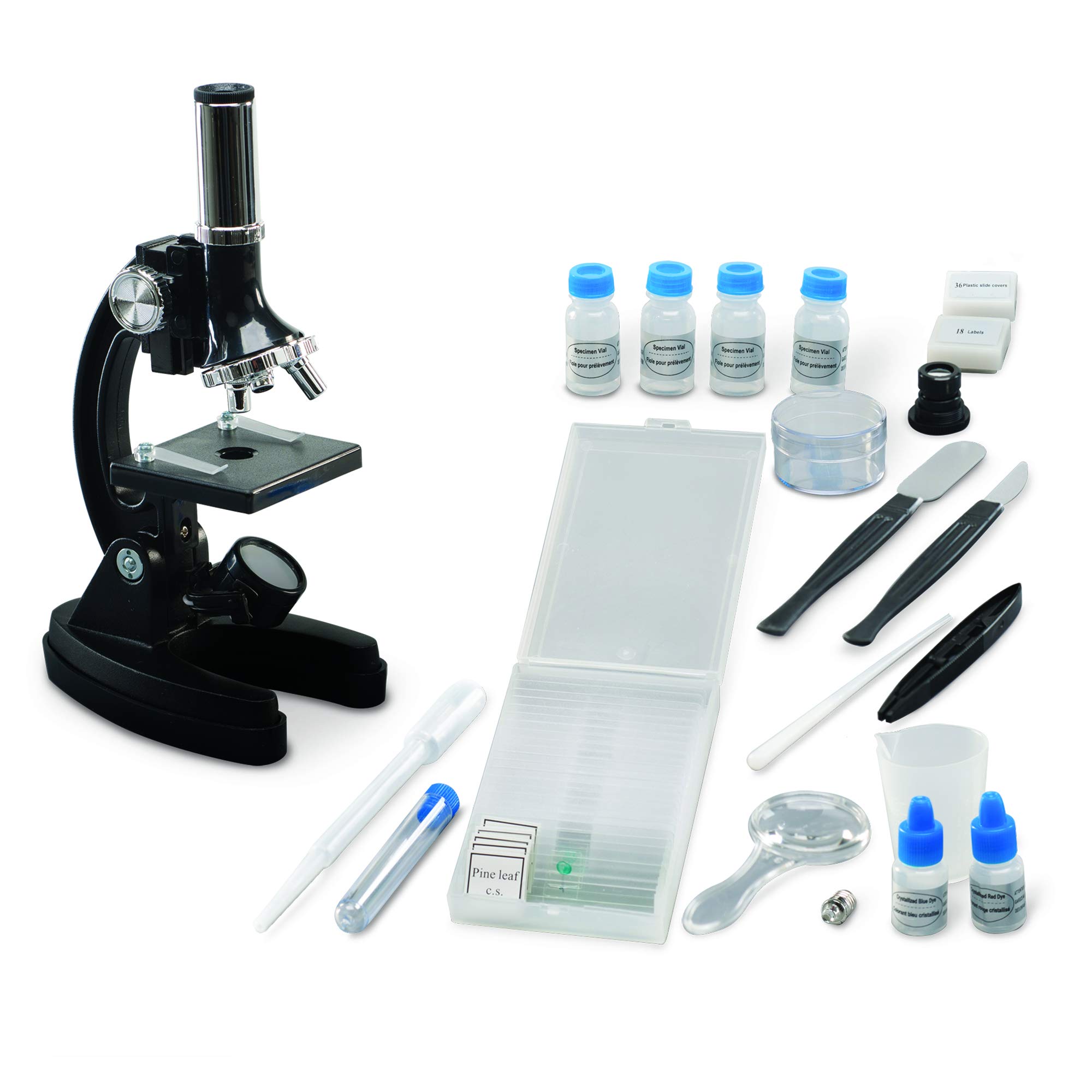
- The microscope covers 50x to 600x magnification.
- Prepared and blank slides come with specimen-preparation tools.
- An activity guide supports home or classroom exploration.
Best For: School-age beginners who want a traditional microscope, specimen tools, and a broad accessory set.
Educational Insights GeoSafari Stereoscope
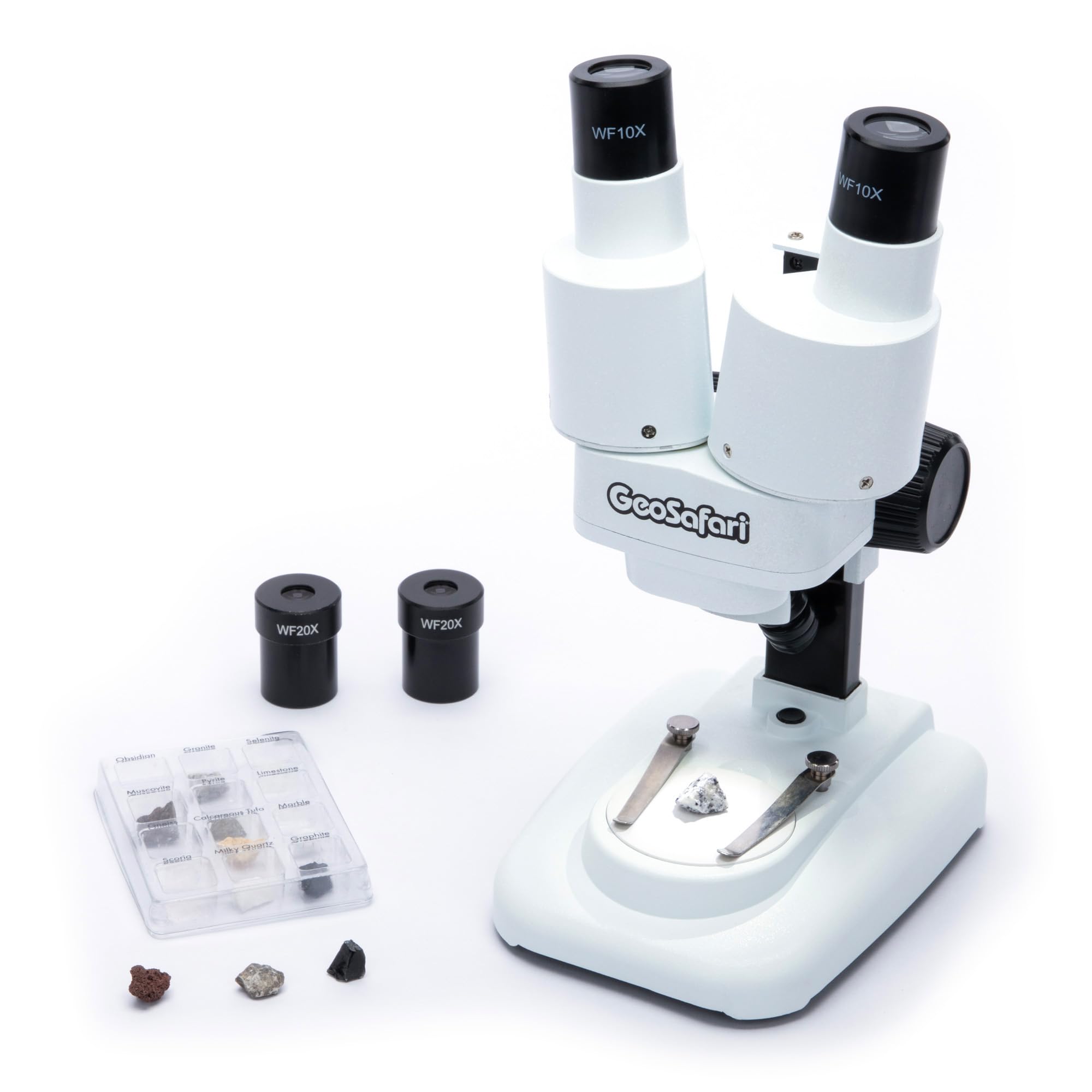
- The binocular stereoscope offers 10x and 20x magnification.
- A top light and stage clips support object viewing.
- The kit includes 12 rock samples.
Best For: Ages 8–12 exploring rocks, minerals, and other larger objects with binocular viewing.
Learning Resources Elite Microscope
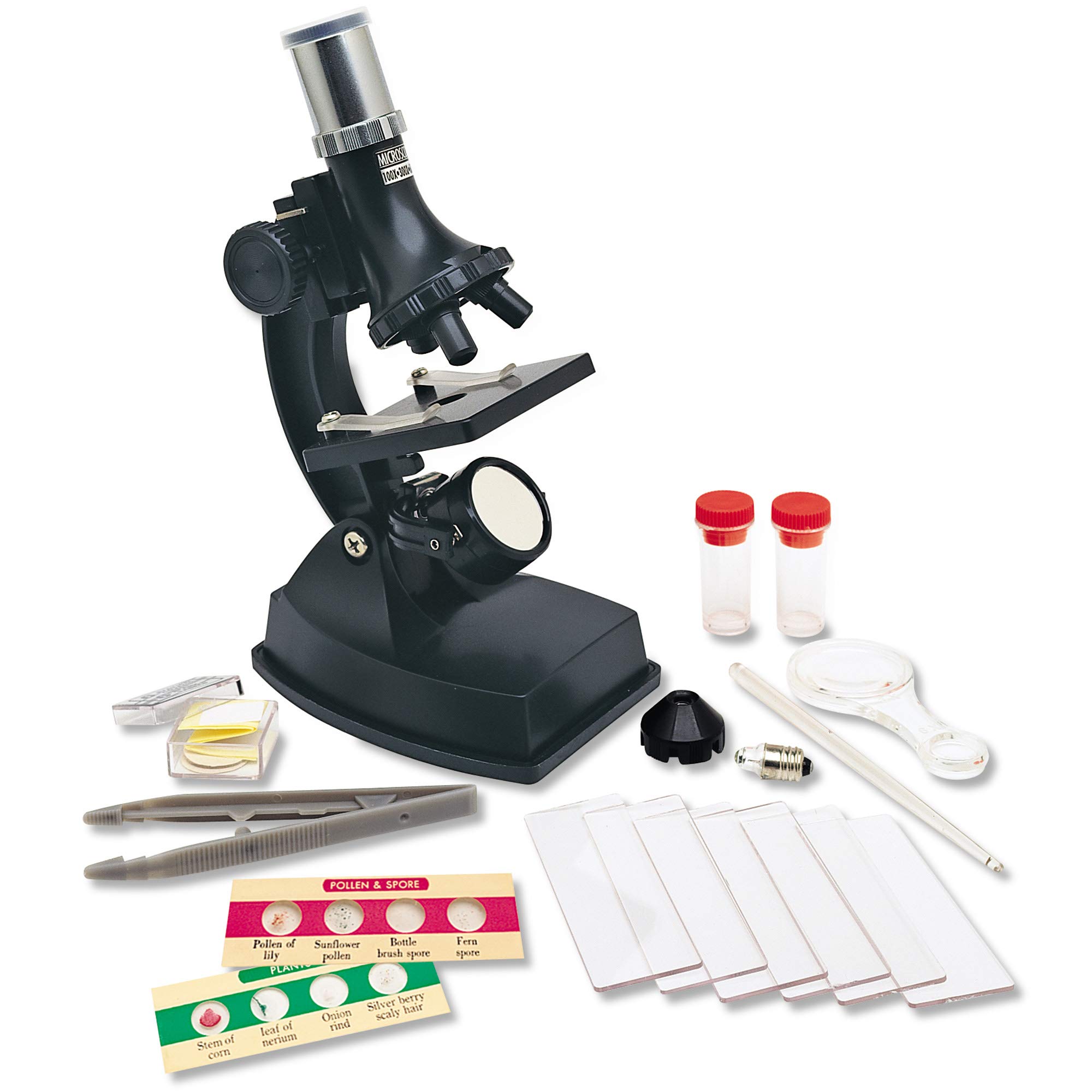
- Three settings provide 100x, 300x, and 600x magnification.
- Slides, vials, and tweezers are included for specimen work.
- It can project a view onto a nearby white surface.
Best For: Children who want multiple magnification settings and a way to share microscope views on a wall.
Educational Insights GeoSafari My First Microscope
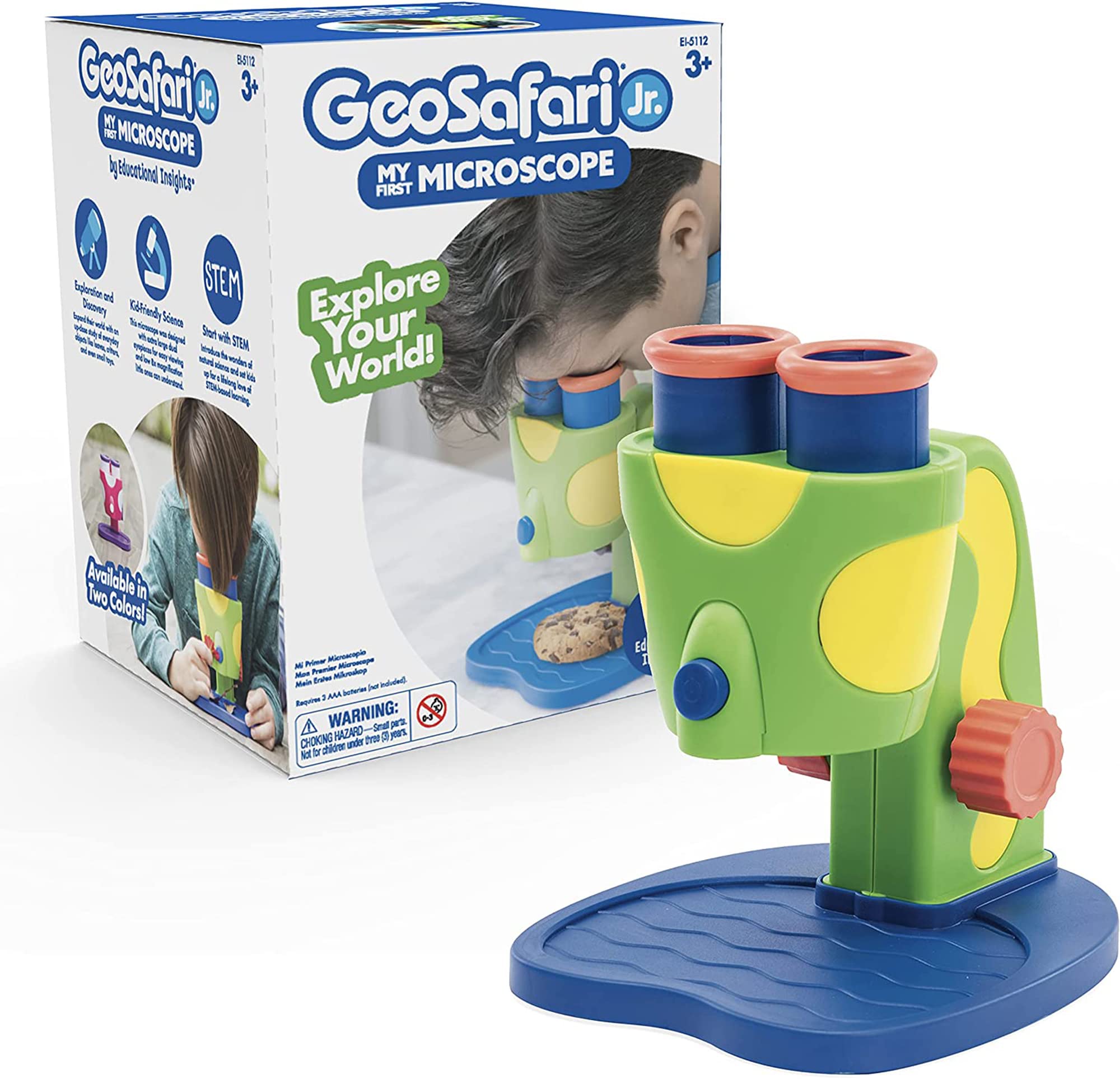
- Two large eyepieces let children keep both eyes open.
- The focus knob is sized for young users.
- Twelve prepared slides are included.
Best For: Very young children beginning science activities with prepared slides and simple controls.
Educational Insights GeoSafari Kidscope
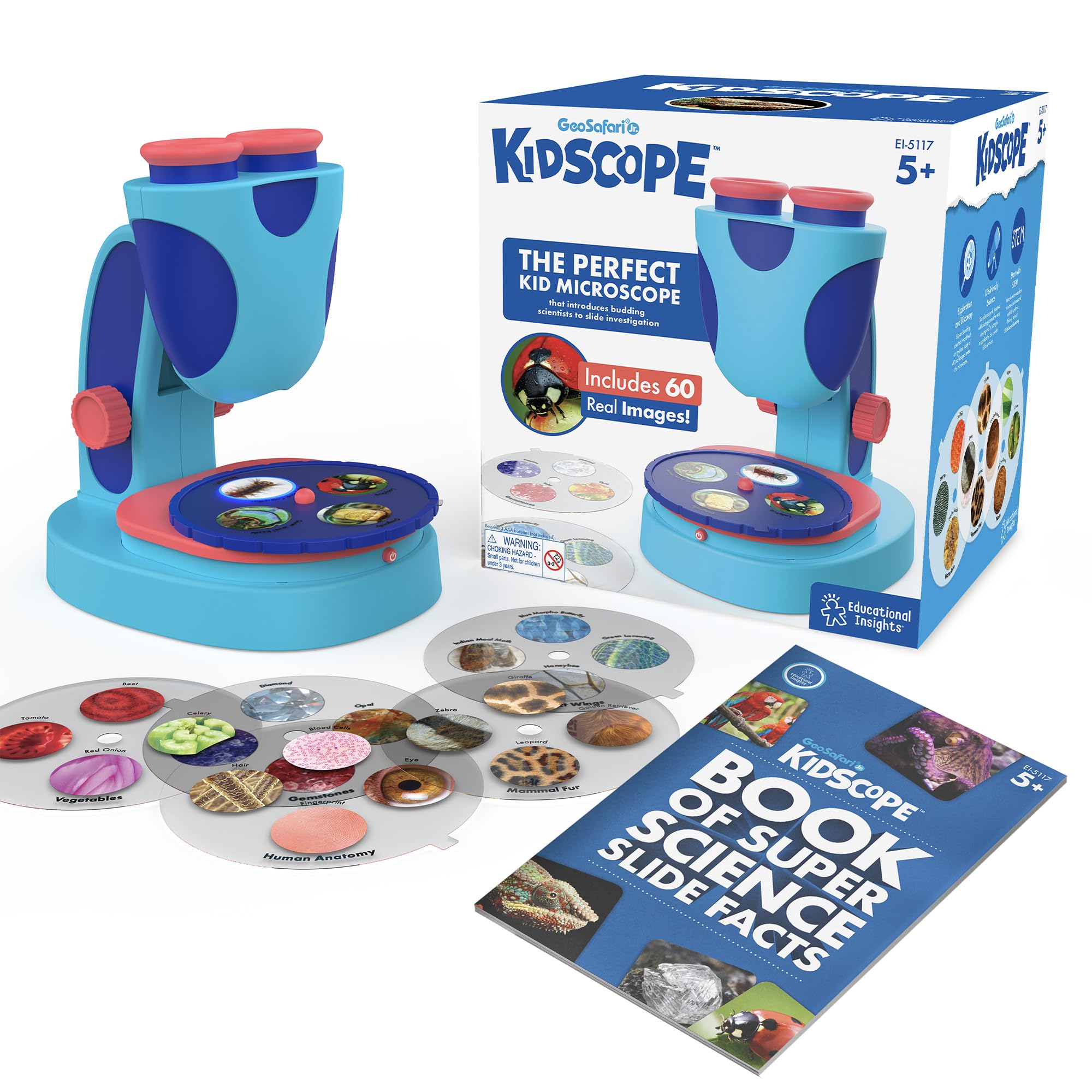
- The double eyepiece supports viewing without closing one eye.
- The set includes 15 slides with 60 images.
- A guide adds over 200 facts for exploration.
Best For: Young learners who benefit from ready-made slide images and simple guided discovery.
Learning Resources Primary Science Viewscope
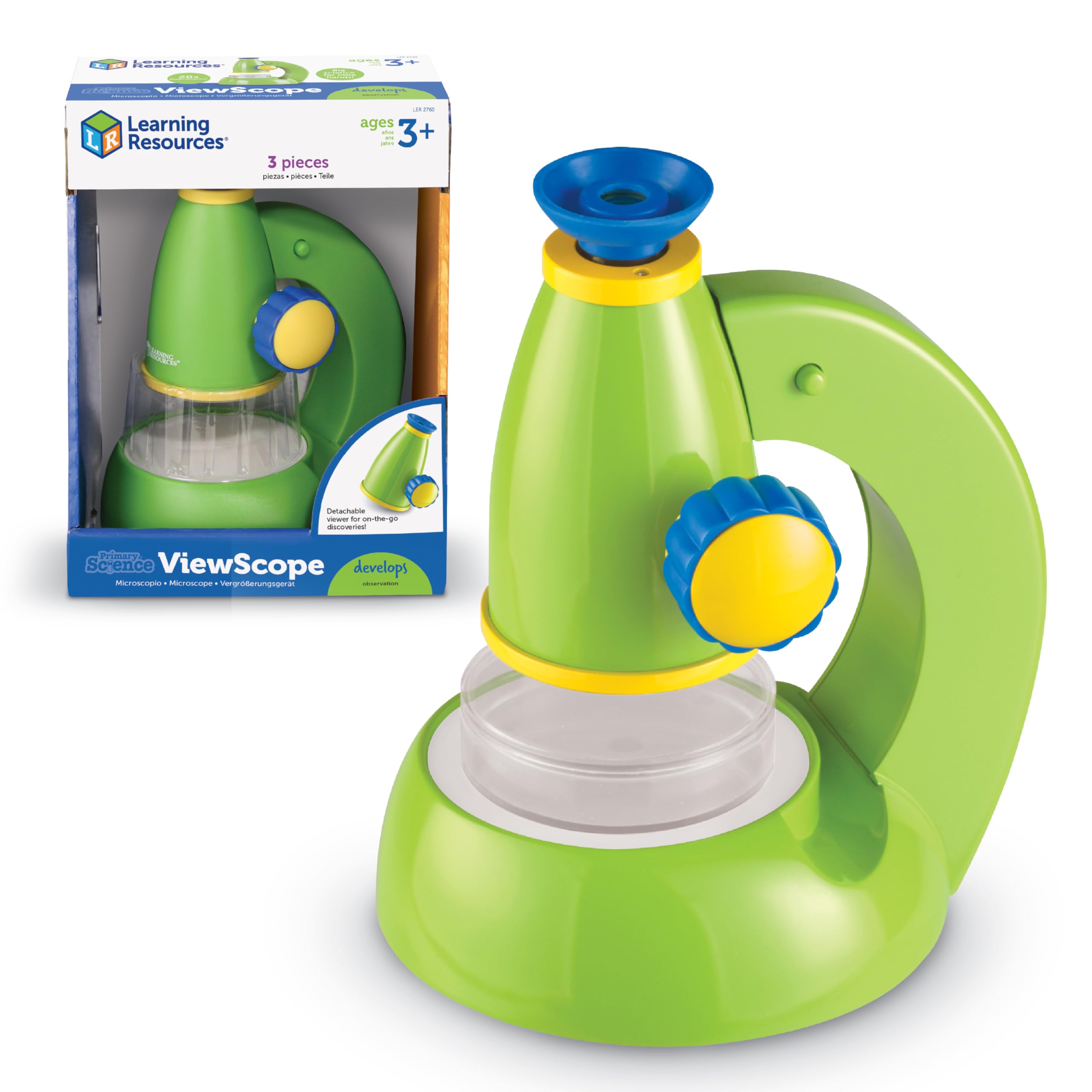
- The viewer detaches from its base.
- A clear plastic specimen case is included.
- It offers 20x magnification and a large focus knob.
Best For: Ages 3 and up who want a detachable viewer for examining collected objects.
Educational Insights GeoSafari Telescope & Microscope Set
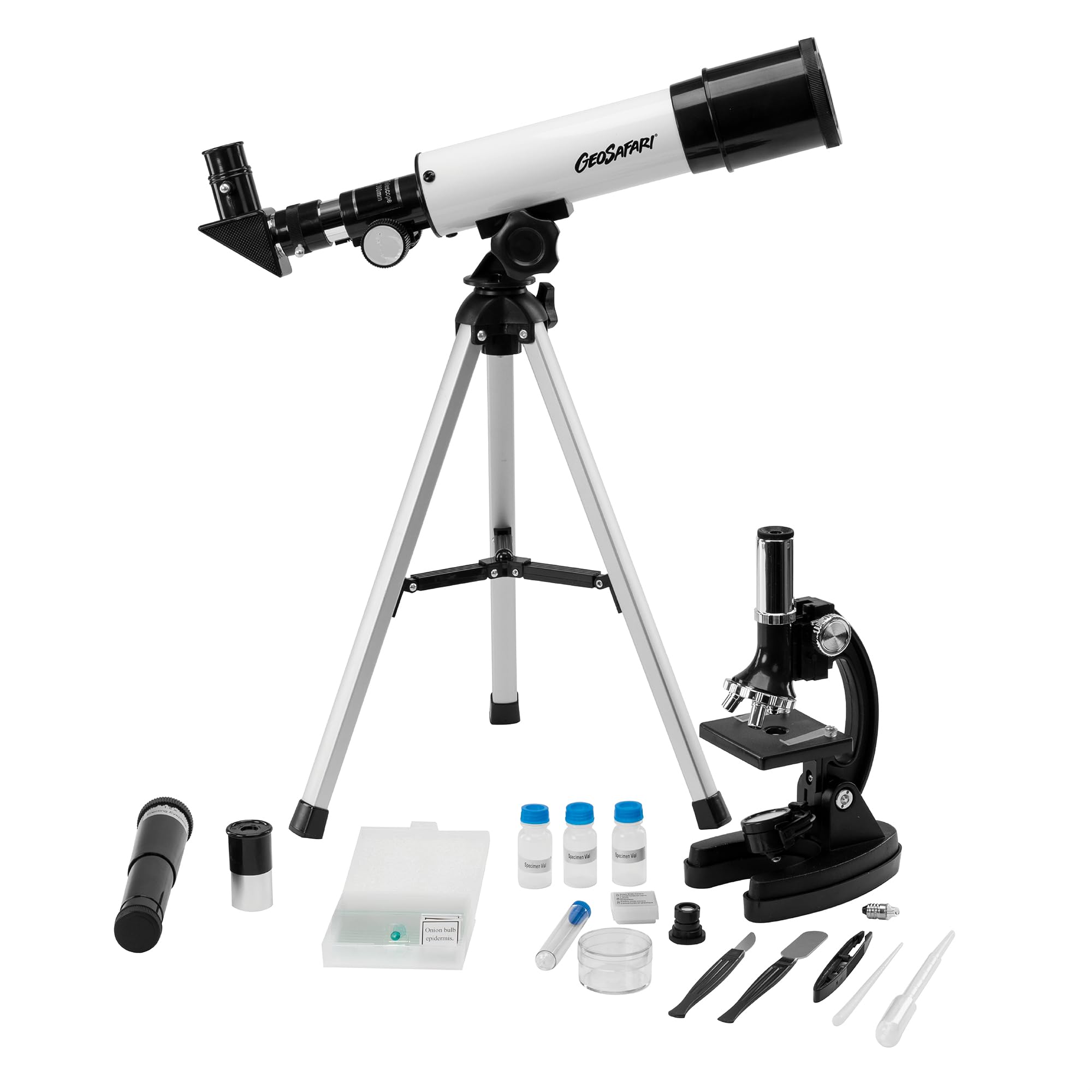
- The microscope offers settings from 50x to 600x.
- Prepared microscope slides are included.
- The kit also includes a 50 mm telescope with a tabletop tripod.
Best For: Families who want a microscope alongside a telescope for broader science activities.
Best for Screen-Based Close-Ups
TOMLOV P10 Microscope for Adults Kids, Handheld Coin Magnifier with Light for Error Coins, Portable Trichome Magnifying Glass 100X, Collector Pocket Jewelers Loupe, Digital Microscope with 2" Screen
The TOMLOV P10 brings close-up viewing to a built-in 2-inch LCD, so children can look together without lining up at an eyepiece. It uses fixed 100x magnification with 4x zoom and has adjustable white LEDs plus UV lights.
Its 16MP camera and built-in memory for 300 photos add a way to save observations, while a USB connection can show images on a computer. The handheld format suits coins, leaves, and other small objects.
This is a more screen-focused option than the other microscope kits here, but its short use time and fixed focus make it better for brief inspections than extended sessions.
Best For: Older kids and families who want a handheld viewer with a built-in screen and image capture.
| Pros | Cons |
|---|---|
|
|
Pick the P10 when a built-in screen and saved photos are central to the activity. Its fixed 100x view works for close inspections, while the short object distance calls for adult help positioning small samples.
The 300-photo memory and computer connection add sharing options that the other supplied microscopes do not specify. Check whether the child is comfortable handling a compact device and whether the battery use time fits the planned activity.
Best for Guided Slide Exploration
Educational Insights GeoSafari MicroPro 95-Piece LED Microscope Set - High Powered Microscope for Kids 8-12, Scientist Kit for Kids with Prepared Slides and Blank Slides, Home or Classroom Science Set
The GeoSafari MicroPro is a traditional microscope kit for children ages 8–12, with magnification from 50x to 600x. It includes prepared and blank slides, specimen-preparation tools, an activity guide, and an accessory storage case.
That combination supports both immediate viewing and collecting or preparing samples at home or in a classroom. Its LED light needs 2 AA batteries, which are not included.
Unlike a digital microscope with a screen, this set centers on viewing through the microscope itself; choose it when slide work and a structured set of materials matter more than screen sharing or saved images.
Best For: School-age beginners who want a traditional microscope, specimen tools, and a broad accessory set.
| Pros | Cons |
|---|---|
|
|
Choose the MicroPro if the child is ready to handle slides and wants materials for preparing specimens, rather than just examining objects placed under a viewer. Its prepared slides make it possible to begin with ready-made samples, while blank slides and tools extend the activity.
A screen and image capture are not specified, so families seeking group viewing should consider whether a conventional microscope fits their needs. Remember to provide the required AA batteries.
Best for 3D Specimen Viewing
Educational Insights GeoSafari Stereoscope - Beginner Stereo Microscope for Kids 8-12, Electronic Stereoscope Viewer with Specimens, Kids Microscope Kit for Scientific Discovery, Student Microscopes
The GeoSafari Stereoscope is a beginner electronic stereo microscope designed to show three-dimensional objects. It offers 10x and 20x magnification, a stage with clips, a focus knob, and a top light.
Twelve rock samples give children an immediate starting point for comparing specimens, and its at-home, classroom, and outdoor uses make it a flexible learning tool. This is a different kind of microscope from slide-focused kits: the supplied details emphasize rocks and other objects rather than high magnification or prepared slides.
It requires 2 AA batteries, which are not included.
Best For: Ages 8–12 exploring rocks, minerals, and other larger objects with binocular viewing.
| Pros | Cons |
|---|---|
|
|
Pick the Stereoscope for children who are curious about rocks and other solid objects and would benefit from binocular viewing. The low 10x and 20x settings serve a different purpose from the MicroPro's higher-power slide range, so consider the kind of specimens the child wants to study.
The included samples help start a geology activity quickly. Check that the child wants object-based observation rather than a screen-based digital microscope or prepared-slide work.
Best for Projecting Discoveries
Learning Resources Elite Microscope, Microscope for Kids, Science Toys for Kids, 21 Pieces
The Learning Resources Elite is a 21-piece microscope set with three magnification levels: 100x, 300x, and 600x. Slides, vials, and tweezers are included for preparing explorations of small biological specimens and other structures.
It can also act as a projector: remove the eyepiece, tilt the microscope toward a nearby white surface, and darken the room to share a view. That feature gives it a group activity angle, though it is not a digital screen microscope and no camera or image storage is specified.
Consider it for children who want hands-on sample preparation and occasional shared projection.
Best For: Children who want multiple magnification settings and a way to share microscope views on a wall.
| Pros | Cons |
|---|---|
|
|
Choose the Elite when a child wants a traditional microscope with several magnification choices and the option to project a view for others. The slides, vials, and tweezers support hands-on preparation, while projection depends on room setup and is not the same as a live digital display.
Power requirements are not specified, so check them before buying. It is a useful fit for shared exploration if a computer connection or saved images are not essential.
Best for a First Microscope
Educational Insights GeoSafari My First Microscope
My First Microscope is designed for young beginners, with two extra-large eyepieces so children do not need to close one eye, a kid-sized focus knob, and an overhead LED light. Its 2.5x–8x magnification offers a wide field of view rather than the high-power slide examination available from several other options here.
Twelve prepared slides are included, giving a child ready-made material to explore. The microscope needs three AAA batteries, which are not included.
Its low magnification and accessible controls make it a simple introduction, while older children seeking detailed specimen study may want a higher-power model.
Best For: Very young children beginning science activities with prepared slides and simple controls.
| Pros | Cons |
|---|---|
|
|
This is a sensible first step for a preschool-age child who needs easy focusing and a forgiving wide view. Its prepared slides remove the need to gather specimens before starting, but the low magnification is intended for introduction rather than detailed biological study.
Choose a higher-power kit as the child becomes interested in slide preparation and closer examination. Check that the child can use the two-eyepiece design comfortably, and have AAA batteries ready.
Best for Prepared Images and Facts
Educational Insights GeoSafari Kidscope - STEM Toys for Kids, Toddler Learning Toys, Kids Microscope with Prepared Slides, Science Set for Boys and Girls Ages 5+
The GeoSafari Kidscope combines a comfortable double eyepiece and easy-focus knob with an LED light, giving children a straightforward introduction to close-up observation. Its set includes 15 slides with 60 real images, a storage drawer, and a guide with over 200 facts.
Those materials make it possible to explore without first collecting or preparing specimens. The product is aimed at young learners, while its supplied details do not give a numeric magnification range.
It requires three AAA batteries, which are not included. Choose it for guided, ready-to-view learning rather than for a child who needs a specified high-power digital microscope.
Best For: Young learners who benefit from ready-made slide images and simple guided discovery.
| Pros | Cons |
|---|---|
|
|
Consider the Kidscope when a young child is more likely to engage with prepared images and a fact guide than with collecting and mounting specimens. Its double eyepiece and easy-focus control address beginner use, and its drawer keeps the included slides together.
Numeric magnification is not specified, so buyers who need a particular power level should check before choosing it. The included slides are image-based, making this a different activity from hands-on sample preparation.
Best for Simple Outdoor Viewing
Learning Resources Primary Science Viewscope - 3 Pieces, Ages 3+ Microscope for Kids, Beginner Microscope
The Primary Science Viewscope is a simple early science tool for children ages 3 and up. Its detachable viewer, base, and clear plastic specimen case make a compact three-piece set for becoming familiar with how a microscope works.
The 20x magnification and large focus knob keep the design straightforward, while the specimen case supports collecting or carrying small samples. It does not have the multiple magnification steps, prepared-slide kit, or digital screen described for other products in this roundup.
Choose it when simple handling and viewing collected objects matter more than a broad set of accessories.
Best For: Ages 3 and up who want a detachable viewer for examining collected objects.
| Pros | Cons |
|---|---|
|
|
The Viewscope fits a young child who wants to inspect collected objects with minimal setup. Its detachable viewer and specimen case make it more portable in concept than a full slide-preparation kit, but the supplied features give just one 20x level and do not specify a screen or illumination.
Choose it for basic familiarization with microscope-style viewing. If the child wants prepared slides, sample tools, or saved images, another option in this roundup is a closer fit.
Best for Microscopy and Stargazing
Educational Insights GeoSafari Telescope & Microscope Set - Science Kit with Refractor Telescope and Microscope for Kids, Includes Prepared Slides, Discovery Toys, Science Gifts for Kids 8-12
This GeoSafari set combines a children's microscope with a refractor telescope, so it can support activities from slide observation to stargazing. The microscope has settings from 50x to 600x, 10x and 20x glass eyepieces, and prepared slides; its all-metal, die-cast construction is also noted.
The telescope includes a 50 mm achromatic objective lens, all-glass optics, two eyepieces, and a tabletop tripod. The microscope light needs 2 AA batteries, which are not included.
This is a bundle rather than a digital microscope, so its appeal rests on the two science tools together rather than screen viewing or image capture.
Best For: Families who want a microscope alongside a telescope for broader science activities.
| Pros | Cons |
|---|---|
|
|
Choose this set when the telescope is also a meaningful part of the purchase. The microscope has a broad power range and prepared slides, but the additional telescope makes it a larger scope of purchase than a dedicated microscope.
No screen or image capture is specified, so it does not fill the digital-sharing role of the TOMLOV handheld. Check whether the child wants both kinds of observation and plan to supply the microscope's AA batteries.
How to Choose Digital Microscopes For Kids
How We Picked Digital Microscopes for Kids
These picks cover the distinct ways children explore close-up subjects: screen-based handheld inspection, traditional slide work, stereo viewing of solid objects, and simple first microscopes for younger learners. We considered age cues, magnification details, included samples and tools, lighting, and whether a child can share observations through a screen or projection.
All supplied candidates fit a child-oriented microscope search, but they do not all use a digital screen. The TOMLOV P10 is the clear screen-equipped option; the other selections serve adjacent microscope activities.
That distinction helps families match the device to how a child wants to explore instead of treating every microscope as interchangeable.
Comparing Digital Microscopes for Kids
The main choice is between a live screen and an eyepiece. The P10 has a 2-inch LCD, photo storage, and computer connection.
The Learning Resources Elite adds a projection method, while the other microscope kits focus on direct viewing through the eyepiece or detachable viewer.
Magnification figures need context. The P10 uses fixed 100x magnification at a close working distance.
The MicroPro and telescope-microscope set offer higher ranges for slide work, while the stereoscope's 10x and 20x settings fit larger three-dimensional specimens. My First Microscope's 2.5x–8x and the Viewscope's 20x suit introductory viewing.
Kidscope has no numeric range specified, so compare it by its prepared images and guided content instead.
| Product | Standout features | Best for |
|---|---|---|
| TOMLOV P10 Digital MicroscopeCheck Price |
| Older kids and families who want a handheld viewer with a built-in screen and image capture. |
| Educational Insights GeoSafari MicroPro 95-Piece LED Microscope SetCheck Price |
| School-age beginners who want a traditional microscope, specimen tools, and a broad accessory set. |
| Educational Insights GeoSafari StereoscopeCheck Price |
| Ages 8–12 exploring rocks, minerals, and other larger objects with binocular viewing. |
| Learning Resources Elite MicroscopeCheck Price |
| Children who want multiple magnification settings and a way to share microscope views on a wall. |
| Educational Insights GeoSafari My First MicroscopeCheck Price |
| Very young children beginning science activities with prepared slides and simple controls. |
| Educational Insights GeoSafari KidscopeCheck Price |
| Young learners who benefit from ready-made slide images and simple guided discovery. |
| Learning Resources Primary Science ViewscopeCheck Price |
| Ages 3 and up who want a detachable viewer for examining collected objects. |
| Educational Insights GeoSafari Telescope & Microscope SetCheck Price |
| Families who want a microscope alongside a telescope for broader science activities. |
Choosing a Microscope for a Child's Age and Activity
For a young beginner, prioritize large, easy-to-use controls and samples that are ready to view. My First Microscope has extra-large eyepieces and prepared slides; the Kidscope pairs a double eyepiece with 15 slides and a fact guide.
The Viewscope offers a simpler detachable viewer and specimen case for basic exploration.
Older children who want to prepare samples can get more from the MicroPro's blank slides and preparation tools or the Elite's slides, vials, and tweezers. For mineral collections and other solid subjects, the stereoscope is the category-specific fit because it is designed around 3D objects and includes rock samples.
Screen, Lighting, and Sharing Options
A digital microscope for kids can mean different things in practice. The TOMLOV P10 has a screen for live viewing, a camera, stored photos, adjustable white lights, UV lights, and USB computer viewing.
These features are useful when children want to revisit or show observations. Its fixed focus and short object distance mean the child needs to position specimens close to the lens.
Projection on the Elite works differently: it needs a dark room and a nearby white surface. The other models describe built-in or top lighting, but do not specify screen capture.
Also check the practical setup before buying: battery needs vary, and the included kits do not all provide power cells.
Who Should Buy Which Kids' Microscope?
Choose the TOMLOV P10 for handheld screen viewing and saving close-up photos. Choose the MicroPro for a guided traditional kit with prepared and blank slides, or the Elite for several power settings and occasional projection.
The GeoSafari Stereoscope suits a child studying rocks and other three-dimensional objects. My First Microscope and the Kidscope are aimed at accessible, prepared exploration for younger learners, while the Viewscope is the simplest choice for familiarizing a child with a microscope.
Select the telescope-and-microscope set when stargazing is part of the plan as well as slide viewing.